Published: July 25, 2026| ⏱️10 minutes
By Clara M.
Have you ever noticed—your yard has nice furniture, pretty flowers, and yet nobody actually wants to spend time out there?
Last month I dropped by my neighbor's place. His yard is about 900 square feet—not huge, not tiny. He'd put down a solid lawn, a patio set in the middle, and roses around the edges. Looked lovely. But he told me, "In spring, the pruning kills my back. In summer, the mosquitoes drive us inside. The kids run two steps and bang into the table legs. My parents say it's too sunny to sit out. All year long, we've probably used this yard for less than a week combined."
A yard that doesn't keep people around is never about the square footage. The real problem? You've treated your yard like a painting—pretty to look at, but not built for living. You haven't made it a place where every member of the family can find their own spot.
So today, let's talk about how to make a backyard under 1,000 square feet work for three generations—so that everyone actually wants to stay.
Start by Asking Yourself Three Questions
Before you even think about plants or paving, grab a piece of paper and answer these:
What does the older generation need? A quiet sunny spot for tea? A raised bed for tomatoes? Do they need handrails or firm footing?
What do the kids need? How old are they? Do they love running, digging, drawing, or riding little bikes?
What do you and your partner need? Weekend BBQs with friends? Or just a quiet corner to read after work?
Write it all down. A truly useful yard gives each person their own little territory—not a jumble of functions that frustrate everyone.
Three Zones, Each with Its Own Job
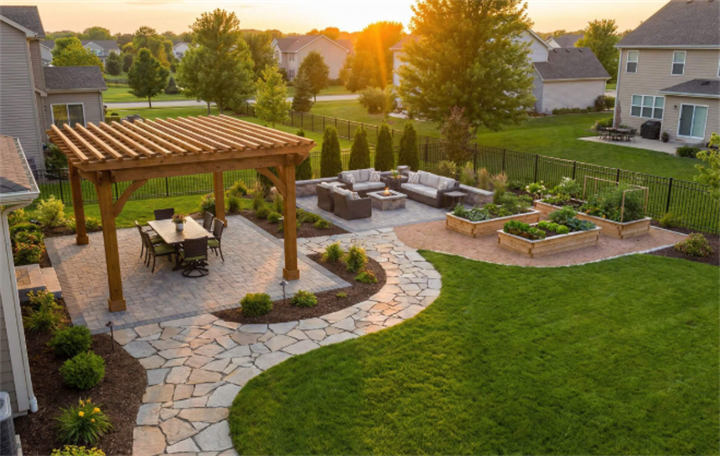
Under 1,000 square feet, carving out three zones sounds tight. But here's the trick—you don't need walls or fences. Use different paving, low plants, or slight changes in height to gently separate spaces.
The Elders' Corner: Quiet, Easy to Get Up From, No Bending Over
Why did my neighbor's parents hate his yard? Too exposed, too sunny, nowhere comfortable to sit.
Put this zone close to the house, where morning sun comes in but afternoon shade falls. It doesn't need much room—about 60 to 70 square feet is plenty. A wicker chair with armrests, a small side table, and a couple of shrubs or hydrangeas around the edges create a natural "green wall" that blocks wind and gives a cozy, sheltered feel.
Crucial detail: Leave at least 12 inches of clear space beside the chair so older folks can push themselves up easily. Skip gravel or pebbles—walkers and canes sink right in. Use non-slip tiles or smooth, treated wood that stays safe even after rain.
If they like growing things, don't make them bend down. Build a raised planter box at waist height—they can sit on a stool or even use it from a wheelchair. Plant cherry tomatoes, spring onions, or mint. Easy, useful, and rewarding.
The Kids' Zone: Visible, Safe to Fall On, Fun to Explore
Place this zone where you can see it clearly from the house or from the main sitting area. Not to spy—just for peace of mind. You can be grilling or chatting and still glance over without running across the yard every two minutes.
Ground cover comes first. Skip stone or concrete. Kids fall—it's what they do. Use artificial turf, rubber mats, or at least three inches of wood chips. That one investment is totally worth it.
Keep the equipment simple. A sandbox (with a lid—otherwise the neighborhood cats will claim it), a chalkboard wall (paint a section of fence with blackboard paint), and a low climbing frame or small slide. Kids don't need fancy toys—they need space to run, jump, and get messy.
Draw an invisible boundary—a row of low hedges, a change in paving color, or just let the lawn transition naturally. Let kids know "this is your zone." But keep sightlines open so you can see them from the elders' corner.
The Shared Gathering Space: Where Everyone Comes Together
This is the heart of the yard.
Place it in the middle or right outside the back door. Lay down a wood deck or a paved patio, and put a table that seats four to six people. Leave room beside it for a grill—you don't need a huge outdoor kitchen. A portable kettle grill plus a folding prep table works just fine.
Why is this table so important? Because families really come together over meals. Weekend barbecues, evening tea, birthday cake—when those moments happen in the yard, the yard starts to hold memories. And memories make people want to linger.
Don't forget the lights. A few strings of warm white bulbs or some solar ground lights. Once the sun goes down, light makes the difference between "let's go inside" and "let's stay a little longer."
How to Connect the Three Zones
Zoning isn't about cutting the yard into cubes. You need a path that makes it easy to move between them.
Make the main walkway at least three feet wide—enough for two people to walk side by side, and for a walker or cane user to navigate comfortably. Avoid sharp zigzags or winding curves. They look cute in magazines, but older folks stumble on them and kids trip.
Change the surface material for the path to signal a transition—say, non-slip tiles near the elders' zone, wood decking for the gathering area, and stepping stones or gravel for the path. When the texture underfoot changes, people instinctively know they're moving into a different space.
Keep the route from the house to the yard entrance straight and simple. If people have to dodge around planters or duck under laundry lines, they just won't bother going out.
A Few Little Tricks That Make the Yard Come Alive
Shade is everything. Without it, summer turns your yard into an oven. A patio umbrella at least seven feet across, or a retractable awning fixed to the wall, turns the yard from "morning-and-evening only" to "all-day usable." If your budget stretches, plant a small deciduous tree—it shades in summer and lets winter sun through.
Hide the clutter. Kids' toys, garden tools, grill accessories—if they're left out, even the prettiest yard looks messy. A lockable storage box or a few hooks on the fence solves that in minutes.
Pick low-maintenance plants. Skip fussy exotics. Go for local, drought-tolerant, perennial varieties. Roses are beautiful but high-maintenance; hydrangeas, hostas, boxwoods—they practically take care of themselves. If your yard is a chore, you'll avoid it. Make it easy.
Leave a patch of "nothing" —maybe 20 or 30 square feet. Just grass or fine gravel, no furniture. Kids can roll on it. Adults can spread a blanket and stare at clouds. Grandparents can stretch their legs. A yard where every inch has a "job" can feel suffocating. Empty space is not wasted—it's breathing room.
Evening Is the Real Test
Plenty of yards look great in daylight but die at sunset.
A good yard is even more inviting after dark than during the day.
You don't need a professional lighting plan. String three or four sets of warm fairy lights over the dining table or along the fence. Place a couple of solar path lights along the walkway. Put a small portable lamp on the side table in the elders' corner. Keep the light warm, dim, and scattered—no blinding floodlights. This isn't a sports field.
Once the lights come on, the whole yard changes mood. Summer evenings—grandparents sipping tea under soft glow, kids chasing fireflies on the grass, you and your partner talking at the table—that's when nobody wants to go back inside.
At the End of the Day, a Yard Is About Keeping People
I've seen gorgeous yards—rare plants, elegant sculptures, expensive imported furniture—that the owners use maybe twice a year. And I've seen humble little spaces—plain wooden decks, secondhand chairs, cuttings from neighbors' gardens—where every evening, the grandfather rocks in his chair, the kids run barefoot, the parents sip their drinks, and no one rushes to leave.
A yard isn't measured by how beautiful it looks. It's measured by how long it can hold you.
Under 1,000 square feet, three zones—it sounds like a math problem. But the answer is simple: give the elders a shaded nook, give the kids a soft place to fall, and give yourselves a table to gather around. Connect them with an easy path, and turn on a few warm lights after dark.
The rest? Let time do its work.
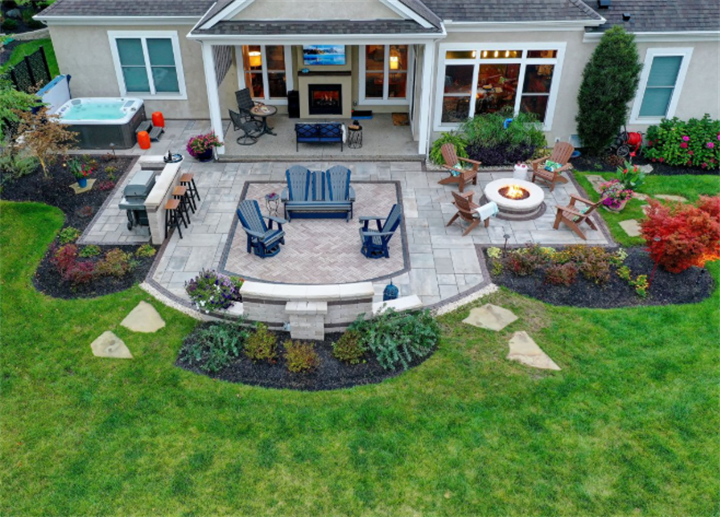
FAQs
Q: Can you really fit three zones in under 1,000 square feet? Won't it feel cramped?
A: Absolutely—as long as you use "soft" dividers like paving changes, plants, and slight level differences, not walls. A 70-sq-ft corner for elders, a 100-sq-ft play area, a 200-sq-ft gathering zone, plus walkways—it all fits comfortably.
Q: Won't kids' noise bother the elders if they're close together?
A: Plant a dense row of shrubs or put a low trellis with climbing vines between the zones. It buffers sound while keeping sightlines open. Grandparents can see the kids playing, but the noise is softened.
Q: We're on a tight budget—where should we start?
A: Start with the gathering zone—lay a patio, get a table, add a shade umbrella. That's the space the whole family will use most. Add the kids' and elders' zones later as you can.
Q: Our yard faces north and doesn't get much sun.
A: Choose shade-loving plants like hostas, hydrangeas, and ferns. Use light-colored paving to reflect what light there is. A well-placed outdoor mirror on the fence can also "borrow" brightness.
Q: What happens when the kids outgrow their play zone?
A: Design with the future in mind—a sandbox can become a flower bed, a climbing frame can be swapped for a hammock, the chalkboard wall can turn into a photo display. A good yard grows with your family.
Disclaimer
This article is for informational purposes only and does not constitute professional landscape design or construction advice. Every yard is different in terms of terrain, soil, climate, and local building codes. Please consult qualified professionals before undertaking any project. The author and publisher assume no liability for any losses or damages resulting from the use of this information.
References
[1] "Maximizing Small Outdoor Spaces: How 3 Designers Would Do It," Architectural Digest, June 23, 2026.
[2] "8 Affordable Backyard Ideas to Steal from This Stylish, Low-Maintenance Beach House," Better Homes & Gardens, February 25, 2026.
[3] "8 Backyard Upgrades Designers Use to Create a More Relaxing Outdoor Space," Better Homes & Gardens, July 1, 2026.
[4] "How Landscape Architects Plan Outdoor Spaces for Multi-Generational Use," Ichthus Architects, June 28, 2026.
[5] "The Less Is More Garden: Big Ideas for Designing Your Small Yard," Mid-Continent Public Library, May 30, 2026.
Author Information:
Clara M.
A landscape architect, a mother of three children, now specializes in diagnosing "Why can't people stay in the yard?" Her designs do not aim for being photogenic; they only care about whether you would be willing to spend an extra ten minutes sitting in the evening. She believes that a truly functional backyard will make you forget your phone but remember the wind and the tree shadows of that day.
Recommend:
Hot-Dip Galvanized vs. Stainless Steel Hardware for Coastal Decks: A Life-Cycle Cost Analysis
Outdoor Kitchen Stucco Finishes: Smooth vs. Exposed Aggregate—The Real Cost Breakdown Before You Build
Build a Backyard Stage for Children’s Theater and Family Shows: Embedded, Sloped Seating That Fits Right In
Soapstone vs. Granite vs. Concrete for Outdoor Countertops: Stains, Cracks, and 10-Year Ownership Costs