Published: July 24, 2026| ⏱️9 minutes
By Clara M.
The biggest waste in a backyard isn't the space. It's the sightlines.
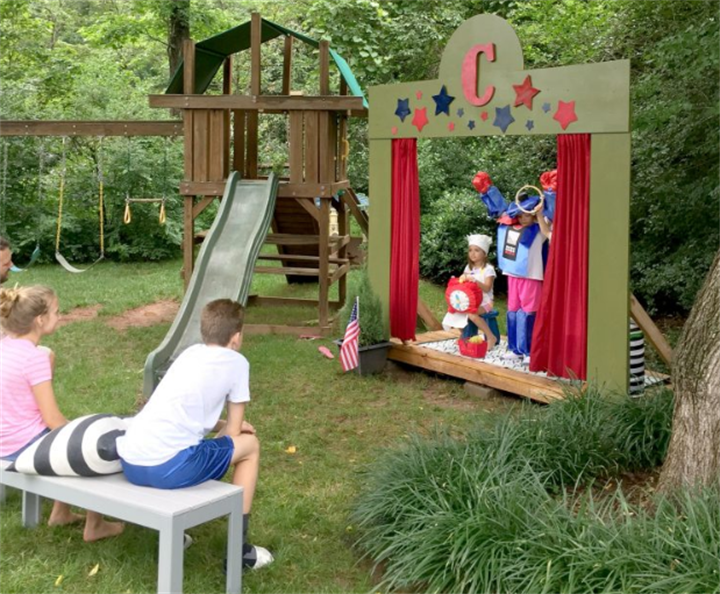
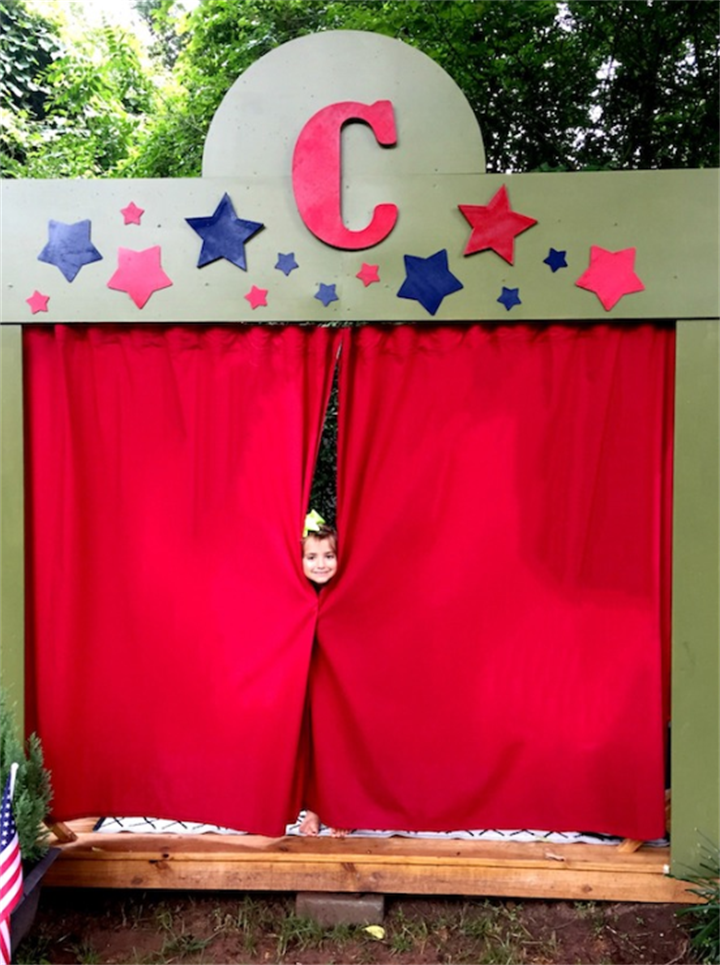
Picture this: the kids drape themselves in bedsheets and take the stage, while the grown-ups sit on the grass, craning their necks, trying to peek between the heads in the front row.
That's the moment you realize a backyard you actually want to hang out in has to solve one thing first—how everyone sees the show.
Carving a small seating area into a gentle slope isn't just for professional theaters. It's the one move that turns a one-time family performance into a lasting memory.
Let's talk about how to pull this off at home, in the simplest way possible, while making your whole outdoor space work better than ever.
Why a slope is the first thing a family show needs
Family audiences have one very obvious trait: wildly different heights.
A three-year-old, a seven-year-old, a seated grandma, and a standing dad don't share the same eye level. If you just scatter a few chairs on flat ground, the people in back spend the whole time "looking for a gap."
That quiet frustration is often why, halfway through the show, someone pulls out their phone.
When professional theaters plan their seating, they rely on a common parameter—the sightline clearance. Simply put, the eyes of the person behind need to be higher than the top of the head in front.
China's industry standard, the Code for Design of Theater Buildings (JGJ 57-2016), explains in its commentary to section 5.3.5 that this value is usually taken as 0.12 meters. That means each row should sit at least 12 centimeters higher than the one before it.
In the U.S., the Charlotte Children's Theatre also carefully adjusted row spacing and elevation changes for its small theater. Their goal, as they put it, is "no bad seat in the house." That's more of a design promise than a technical spec, but it gets to the heart of the matter.
In your backyard, you don't need to copy the numbers exactly. Just grab hold of the principle, and you've already solved the biggest problem. Even a few raised steps can completely change the feeling of being part of the performance.
Look at the ground first: let the land do the work
If your yard already has a natural slope, half the job is done. Even a barely noticeable incline is worth using.
The Maebashi House in Japan offers a great example. The designer simply used a semicircular grassy hill as the seating area, said to hold a couple of hundred people. No heavy construction, just following the land's original shape.
You certainly don't need that much room at home, but the idea is the same: cut the slope into a few low terraces, and you've got seating.
If the yard is pretty much flat, don't worry. Building up a slope is easier than it sounds, especially if you don't need a permanent structure.
Bring in some soil, shape a gentle mound, and set wooden steps or stone slabs into it. You'll get seating that feels like it grew there.
This "embedded" approach is safer and cheaper than building a raised platform. You skip the steel and lumber for a framed structure, and rainwater can just soak into the ground instead of needing separate drainage.
But do check where water already flows before you pile up soil. You don't want the new slope directing runoff toward the house. This logic works everywhere—whether you live in a rainy temperate zone or a dry one, drainage is always the same basic puzzle.
How steep is comfortable and safe
Indoor theaters don't have one single rule for slope. Some orchestra sections might pitch the seating at more than twenty degrees to keep sightlines clear. But that can feel too steep for a family backyard, especially with older folks and small kids running around.
Outdoors, for children and family audiences, you can keep it much gentler. A slope of about 15 to 20 degrees is enough to give everyone a clear view, and it's easy to walk on.
Think of it this way: for every meter you move forward, the ground drops about 25 to 35 centimeters. Sitting down, your eyes will just clear the shoulders of the person in front of you.
Step height doesn't need to be exact either. The same Chinese theater code (JGJ 57-2016, section 8.2.2) says that if a walkway gets steeper than a 1:8 ratio, you should build stairs. Section 8.2.5 limits each step to no more than 0.20 meters high. You can use that as a guide.
For a crowd that's mostly kids, though, steps that are 12 to 15 centimeters high feel easier. Make the treads as wide as you can—45 centimeters or even wider works well as both a step and a bench.
A lot of people leave a flat ledge at the front of a wooden step, toss on an outdoor cushion, and call it a seat. Stand up, and it's a walkway. One spot per person, no crowding.
Materials: look around your yard before you buy anything
Seating materials don't have to be expensive. They just need to be honest.
In rainy climates, pressure-treated wood and permeable gravel make a great pair. In dry areas, try stacking stones without mortar, or simply use compacted soil covered with grass. Keep the turf on the risers, and you'll have steps that feel naturally warm.
If you want to keep it really simple, lay a thick log sideways, backfill behind it with soil, and you've got the most basic bench. That's not crude—it lets the seating blend into the yard's personality, as if the little stage was always meant to be there.
Movable seating is worth thinking about, too. The Mumu Theatre in Beijing once used hundreds of retractable seats to switch up their space.
That's a great hint for a backyard: if you don't want the audience area fixed in place all year, use portable low benches, outdoor sofa cushions, or modular wooden platforms to create the slope.
Place wooden blocks of different heights under the platforms, and you've got a stepped layout. When you're done, take it apart, stack it up, and the lawn is a lawn again.
Safety details: the real care is in the things you don't see
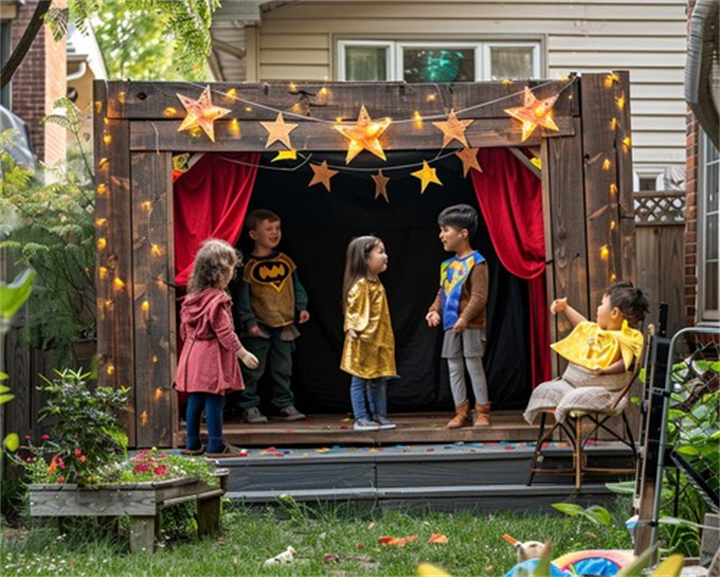
Nobody's going to come inspect your backyard for code violations, but a few things still matter.
Any step higher than ground level needs a slip-resistant surface, especially where moss can grow outdoors. Use wood with a bit of texture on the treads, cut in some anti-slip grooves, or add outdoor grip strips.
Nighttime safety is just as important. Run low solar lights along the sides of the walkway, or tuck tiny LED strip lights into the side of each step. This stops trips and falls, and it bathes the evening performance space in a gentle glow.
Many international safety standards for temporary seating stress that exit paths should have ground-level or glow-in-the-dark markers. Your family doesn't need to follow those rules exactly, but swapping a few lights for a whole summer of peace of mind is well worth it.
If you build the slope by piling up soil, compact it thoroughly. Otherwise, rain can wash it away and create dips.
One rule of thumb from experience: keep the slope of the soil itself no steeper than a 1:2 ratio. That means for every meter of height, you need at least two meters of horizontal distance. It's safer, and it also makes the slope look softer, blending better with the plants in the yard.
Small theaters that already pulled this off
When it comes to combining small spaces with stepped seating, Shanghai once had a theater called WE, only 71.5 square meters, that seated 50 people on embedded steps. It was built for parent-child shows, proving you can fit a real audience into a tiny footprint.
In Yixing, the Yada Theatre simply set its seats right onto the natural slope, turning the outdoor landscape into a backdrop for the performance.
All these examples say the same thing: let the seating belong to the land, and it stops being cold infrastructure. It becomes part of the place.
For a child, watching a show there is a full sensory experience—the smell of grass, the evening breeze, the warmth lingering in the steps—all of it goes into memory.
Don't rush to finish it all at once
This seating area can grow over two seasons.
In the first season, just shape the earth, rough out the slope, and temporarily set out outdoor cushions and light wooden chairs. Spend a summer watching. Which direction gets too much glare from the evening sun? Where do mosquitoes gather? Which step does everyone fight over?
The next season, take those real-life lessons and set the steps in place for good. Add the nighttime lighting. Plant a few shrubs or climbing vines for shade. The seating that grows this way will be the one that truly fits your family's rhythms.
A yard isn't for showing off. It's for being in.
If a gentle little slope makes you willing to linger ten extra minutes in the evening, watching the kids take their clumsy, proud bow on that homemade stage, the whole thing has already meant more than any design statement.
Put down the phone. Remember the breeze and the shifting shadows of the trees. That's really all a backyard has to give.
FAQs
Q: My yard is totally flat. Is building a slope a huge hassle?
Not at all. Piling up soil to form a slope is the most common way to do it.
You bring in planting soil from elsewhere, compact it in layers, and shape a gentle incline, maybe around a 1:3 slope. Then set wooden or stone steps into it.
The work is usually less than building a raised timber deck, and it looks much more natural.
Q: How steep is right? Is there a simple way to judge?
Remember a rough ratio: for every meter you walk forward, the ground drops about 20 to 30 centimeters.
Sit down and check that your eyes naturally clear the head of the person in front. If older family members will sit here often, go gentler—maybe a 15-centimeter drop per meter.
Q: Can I just build steps out of brick?
You can, but watch out for drainage and frost heave.
In cold climates, repeated freezing and thawing can crack rigid structures. A base of crushed stone and stones stacked without mortar handles temperature swings better. In warmer places, you have more flexibility.
Q: What should I think about for nighttime use?
The most important thing is making the edges of the steps visible.
In-ground lights, solar path markers, or low-level lighting on the risers all help prevent missteps. Choose a warm color temperature, and the lights won't steal the show from the performance.
Q: What kind of budget are we talking about?
The range is huge.
A scheme using mostly soil and grass steps can start at a few hundred dollars or the equivalent. If you use pressure-treated wood and custom benches, the cost can climb into the thousands. Try using materials you already have for one season, then decide if you want to upgrade.
Disclaimer
This article provides general information only and does not constitute professional engineering or landscape design advice. Every backyard has unique topography, soil, drainage conditions, and local building regulations. Before any construction, please consult a qualified local professional and comply with the safety and building codes that apply in your area. The author and publisher assume no responsibility for any loss or injury resulting from the use of this information.
References
[1] Charlotte Children's Theatre. (n.d.). Wells Fargo Playhouse. Retrieved July 24, 2026, from https://www.ctcharlotte.org
[2] Takashi Yamaguchi & Associates. (n.d.). Maebashi House. Retrieved July 24, 2026, from https://www.archdaily.com
Author Information:
Clara M.
A landscape architect, a mother of three children, now specializes in diagnosing "Why can't people stay in the yard?" Her designs do not aim for being photogenic; they only care about whether you would be willing to spend an extra ten minutes sitting in the evening. She believes that a truly functional backyard will make you forget your phone but remember the wind and the tree shadows of that day.
Recommend:
Common Folding Door Mistakes: How to Get a Flush Indoor-Outdoor Floor Without Tripping

The Hidden Soft Costs of Outdoor Projects: Design, Permits, and Surveying
Hot-Dip Galvanized vs. Stainless Steel Hardware for Coastal Decks: A Life-Cycle Cost Analysis
Are Reclaimed Bricks Safe for Outdoor Fireplaces? Reuse, Testing, and Mortar Compatibility