Published: July 28, 2026|⏱️11 minutes
By Tommy "The Tally" Kowalski
On a coastal deck, hardware takes a relentless beating from salt spray, dampness, and temperature swings.
The decision about what metal to use isn’t really about the unit price you see on bid day. It’s a cost battle that plays out over decades.
Hot-dip galvanized steel wins the first round with a lower initial number, so it has dominated shopping lists forever. Stainless gets tagged as “expensive” and often gets kicked out during budget reviews.
But the real math is messier than that first column on the quote sheet. A low upfront price can quietly tie itself to years of maintenance bills, downtime, and early retirement.
[Note: Unless a specific source is cited, all cost figures, maintenance intervals, field observations, and judgments in this article come from the author’s own project records, estimate archives, and invoices gathered over fifteen years along the Atlantic Coast and New England. They reflect only the jobs he has personally handled and shouldn’t be treated as universal statistics.]
1. How These Metals Fight Corrosion — My Field Version
Forget the textbook definitions for a minute. Let me explain it the way I’ve explained it to homeowners for over a decade.
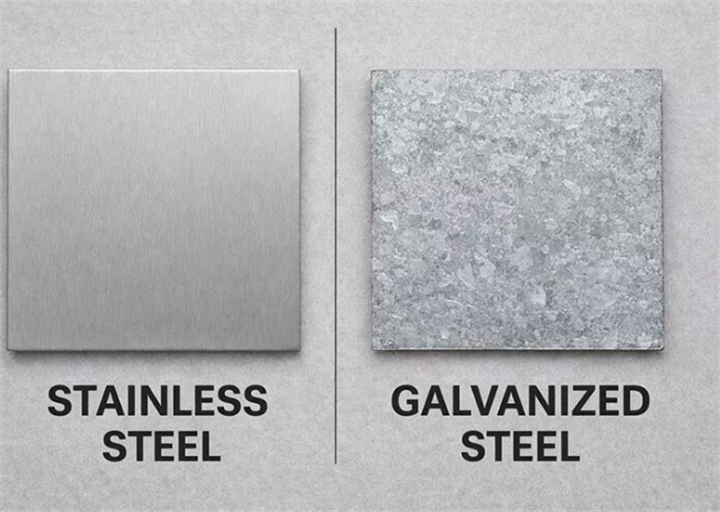
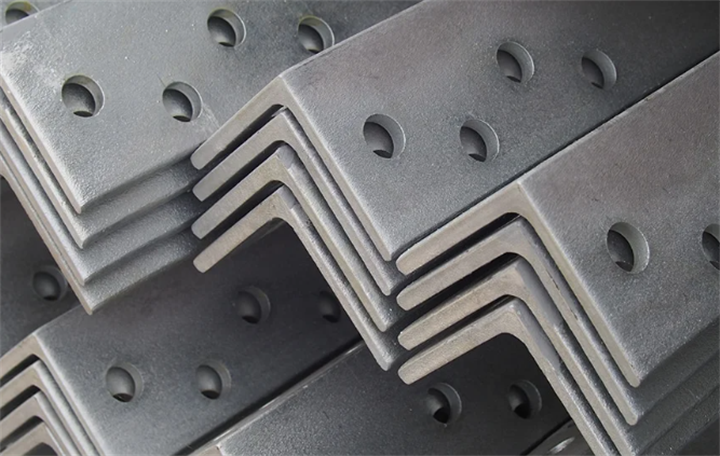
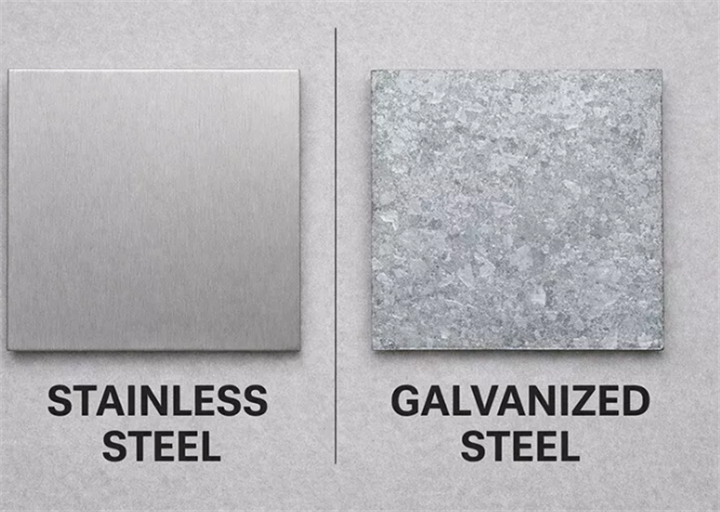
Hot-dip galvanizing works by making the zinc a sacrificial lamb. You dip carbon steel into molten zinc, and it comes out with a zinc-iron alloy skin.
When salt-laden coastal air hits that skin, the zinc oxidizes and gets eaten away first, buying time for the steel underneath.
I once did a teardown on an old dock in Rhode Island and showed the client a cross-section of a galvanized angle. The zinc had gone from roughly 3 or 4 mils down to practically nothing.
The carbon steel behind it was delaminating in sheets of rust. You could snap a piece off with your hands.
That galvanizing gave it a little over a decade of life, and the last couple of years were pure momentum. It’s a consumable system. Once the zinc is gone, the protection is gone.
Stainless steel is a different animal. It doesn’t need a sacrificial layer because it has chromium built right into the alloy.
In the presence of oxygen, it spontaneously forms a passive film—dense, stable, and invisible. Scratch it, and as long as oxygen is around, the film repairs itself.
I have 316 stainless steel posts on a deck in Maine that sits right over the water. They’ve been there thirteen years.
Apart from hosing off salt crusts with fresh water now and then, I haven’t touched them. The surface is still smooth and bright.
It’s not about having a thick shell. It’s about having a self-healing chemical barrier.
This difference is the root of every cost discussion that follows. Keep it in your head.
2. The Seductive Trap of Upfront Pricing
If you stare only at the purchase price, galvanized wins almost every time.
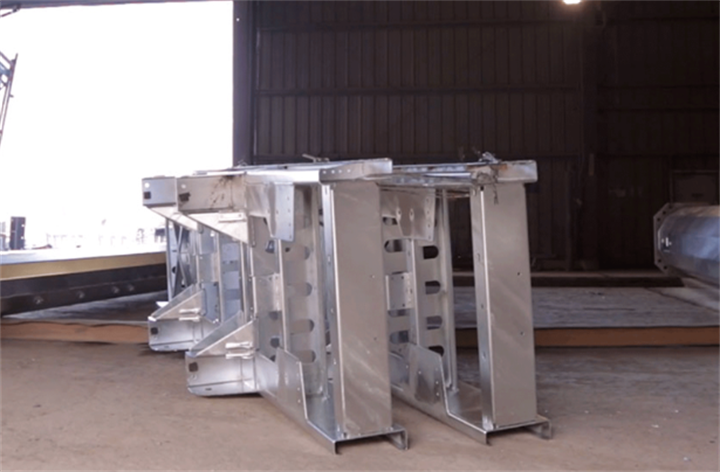
Pulling from two dozen coastal deck and pier estimates I’ve done across the Mid-Atlantic in the last five years, a standard railing package in hot-dip galvanized carbon steel—materials and labor—usually lands somewhere between $55 and $85 per linear foot.
Move to 304 stainless, and that number easily jumps to $140–$190. With 316, it’s often $170–$240 or higher.
For small stuff like connector plates and bolts, the gap gets even more obscene. Galvanized parts can run you as little as a third to 40% of the stainless price.
The trap is that subcontractor quotes typically stop at the moment installation is done.
I’ve seen too many owners get sold by the low number and decide the stainless premium “isn’t worth it.”
One case is burned into my memory. In the summer of 2019, a private dock on Cape Cod, Massachusetts, got a full railing and support package in hot-dip galvanized.
The materials and labor came in almost $90,000 below the 316 option.
Three years and seven months later, they called me back to look at the post bases. Blisters, delamination, white rust gobbed up at the connections.
That ninety grand they saved? That was the moment it started getting paid back, with interest.
According to a 2022 technical bulletin from the American Galvanizers Association—Service Life of Hot-Dip Galvanized Steel in Coastal Environments—the consumption rate for galvanized coatings in a direct coastal splash zone can exceed 0.2 mils per year.
For structural steel, the ASTM A123/A123M-17 standard typically requires an average coating thickness around 3.9 mils for thicker sections, though I’ve seen plenty of coastal job specs that call for 3.4 mils.
At a burn rate of 0.2 mils per year, a coating like that is heading toward exhaustion in a little over a decade.
Real life is usually worse. On every inspection I’ve done, the coating is thinner at welds and edges. Corrosion starts there, and the whole process moves faster than uniform thinning.
I once signed off on a beachfront walkway only four years after construction. Right next to the base plate welds, I found rust spots the size of a quarter. The zinc was completely gone in those spots.
3. The Maintenance Ledger — Numbers I’ve Actually Tallied
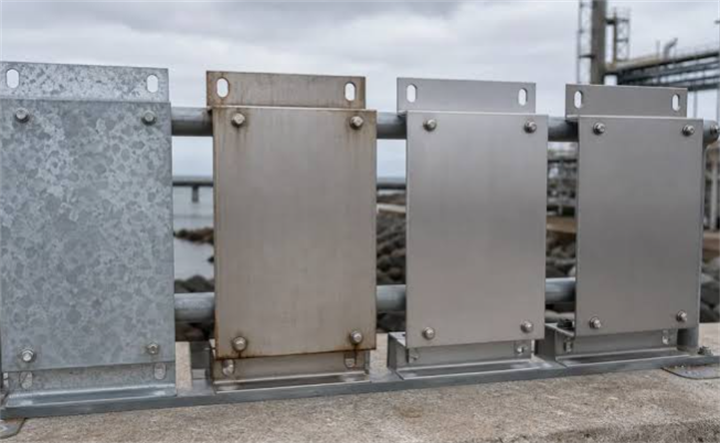
Maintenance on galvanized hardware isn’t a “maybe.” It’s a “when.”
I’ve coordinated multiple coastal repair jobs for galvanized work, and the bills run higher than outsiders ever guess.
The most recent one was about 200 linear feet of galvanized railing. Just setting up and renting the scaffolding ate over four thousand dollars.
Add in pressure washing, spot grinding, and spraying on a zinc-rich primer and topcoat, and the final invoice crossed $12,000.
And that was just the first major intervention inside a ten-year window.
Based on the maintenance histories I’ve tracked over fifteen years, a galvanized deck hardware package in a direct coastal setting will need at least two interventions that size inside a 15-year lifespan.
If the original coating quality was mediocre or the thickness was marginal, the frequency can climb to once every four or five years.
Fold all that maintenance into an annualized cost, then layer on the downtime when the deck is unusable and the owner’s time spent coordinating and supervising.
My field-tested rule of thumb is that the real annual holding cost of a galvanized system often runs two to three times what that initial price tag implies.
I handled a small yacht club job that went with galvanized. Over ten years, their total maintenance and partial replacement invoices added up to over 280% of the original installation cost.
That isn’t a modeled projection. That’s a number I pulled directly from the stack of paid invoices.
On the stainless side, the 316 deck projects I’ve been involved with haven’t generated a single dedicated corrosion-maintenance expense, beyond the occasional couple hundred bucks an owner pays someone to rinse off the salt.
With 304, things get iffy within a few hundred yards of the ocean. I’ve seen two cases where small pinprick rust spots appeared after seven or eight years. The structure was still sound and only a handful of parts needed swapping.
But with 316, I don’t have a single maintenance callback story to tell you.
4. When Stainless Starts Winning — My Crossover Estimate
People always ask me: at what year does that extra stainless money actually come back to me?
Based on my own estimate data and some simple life-cycle cost models I’ve built, here’s what I tell clients.
If you take all the expected maintenance spend, some inflation assumptions, and the risk of premature replacement, and bring them back to present value, the total cost of ownership for a 316 stainless system drops below a well-maintained heavy galvanized system somewhere between year seven and year nine.
That estimate comes from the real spending histories of over a dozen coastal projects I’ve tracked in New England. It’s not an academic study, but I’m confident about the direction of error.
If the maintenance isn’t done perfectly, or if you get a run of wet, salty winters, that crossover point can pull forward to year five.
Here’s the rough math I run in my head for a typical oceanfront residential deck.
Say all the exposed hardware in galvanized costs about $30,000 on day one. Over a fifteen-year window, I’d forecast at least two major repair cycles. At today’s prices, each one could run $10,000 to $15,000. Total spend easily pushes past $50,000.
Go with 316, and your initial might land between $50,000 and $55,000, but you delete those two repair cycles.
In my mental model, the two lines cross right around year eight.
Obviously, this is built on the local labor and material rates I see. Different regions will shift the numbers, but I’ve never seen the overall pattern fail.
5. Coastal Reality Checks — Lessons I Learned the Hard Way
First: never, ever make 304 your primary metal right on the ocean.
Early in my career, I ran a pier project on Long Island Sound where the owner pushed hard to shave costs. I compromised and spec’d 304 stainless handrails.
For five years, everything looked perfect. In year six, tiny brown rust freckles started showing up on the faces exposed to the prevailing wind and splash.
It wasn’t a structural threat yet, but the appearance took a hit. I managed to buy some time with fresh-water rinsing and passivation paste, but for the owner, that unplanned headache already wiped out whatever they had saved.
Since that job, for anything directly exposed to the coast, I only write 316 or 316L into the spec. I make a point to warn clients that 304 can start showing localized rust after about five years.
I don’t have precise data for every microclimate, but what I’ve seen with my own eyes is that the closer you are to the water, the faster 304’s limits appear.
Second: mixing different metals is just volunteering for trouble.
I’ve walked onto more than one job where a supplier took a shortcut and used galvanized bolts with stainless steel plates. Two years later, white rust rings the bolts. A few years after that, the bolt shanks neck down, and you can snap them with pliers.
The damp, salty air acts as a perfect electrolyte, and the zinc becomes the sacrificial anode.
My rule now is either unify everything in 316, or—if mixing is absolutely unavoidable—mandate nylon insulating washers and isolation sleeves.
I put it in writing in the handover notes: “These connection points need inspection every fall. Their expected service life is significantly shorter than a fully stainless system.” That guidance is 100% scar tissue, not a textbook theory.
Third: zinc consumption is irreversible. Every old project inspection I do hammers this home again.
I did a retirement assessment on a twelve-year-old galvanized steel deck. I shot over twenty points with a coating thickness gauge.
On the windward side, at the bottom of the posts, the remaining zinc was generally under 0.5 mils. On the leeward side, I was still picking up 1.5 mils or more.
Where the zinc was nearly gone, the base steel already showed shallow surface corrosion.
My recommendation to the owner was blunt: either commit to an immediate full blast-and-recoat job—likely costing more than half of the original installation—or plan on a full replacement with stainless within three years.
That uneven consumption means you can’t count on the whole assembly to age at the textbook average rate. Weak spots fail early, and once the failures start, repairs turn into a game of whack-a-mole.
6. My Decision Framework — How to Choose Without Regret
Based on everything I’ve lived through, here’s the framework I use for myself. You can borrow it.
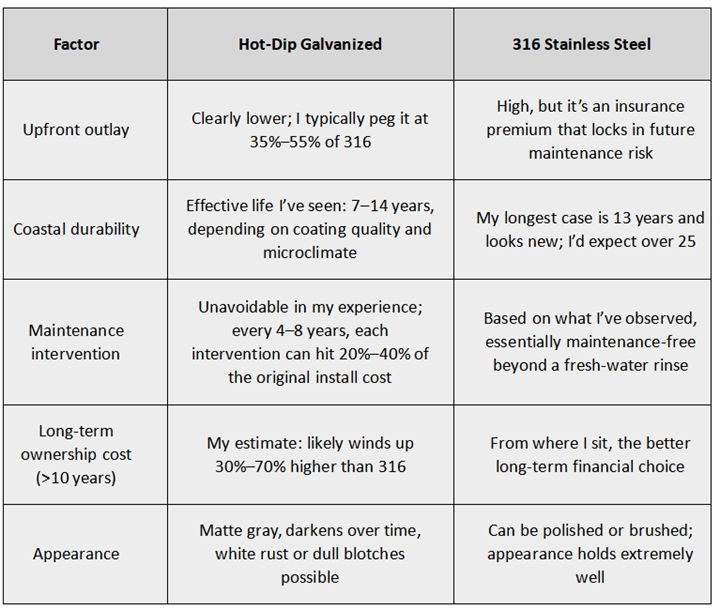
My blunt advice:
Short-term or freshwater only: If you’re only going to own the deck for three to five years before selling, or it’s on a freshwater lake rather than open ocean, and the budget is absolutely brutal, galvanized might be acceptable. But you still need to set aside a maintenance fund in your head and in your ledger.
Long-term oceanfront: If this is a long-term oceanfront home you plan to hold for over a decade, or any structure directly facing the sea with heavy splash, go straight to 316 stainless. The extra money, in my view, isn’t a cost. It’s the price of transferring future maintenance anxiety onto the metal’s own chemistry.
Avoid 304 in heavy salt: Don’t be tempted by 304’s lower initial cost in heavy salt-spray zones. Based on my personal experience, it will start demanding your attention and money after about five years.
Don’t mix metals: Avoid mixing galvanized and stainless in the same assembly at almost any cost. If you must, plan on replacing the sacrificial parts on a schedule, and be clear-eyed that you’re building in a pre-engineered failure point.
Boil it down to one truth I’ve earned over fifteen years: at the coast, not replacing is saving.
Those seductive galvanized unit prices, stretched over a twenty-year horizon, often turn into a high-interest loan paid in installments.
I choose to trust the nature of the material, not the first line on a quote sheet.
FAQs
Q: What’s the difference between 316 and 316L? Do I need to specify the “L”?
A: 316L has a lower carbon content, which gives it better resistance to intergranular corrosion after welding. If your deck hardware involves a lot of field welding, I personally lean toward specifying 316L. Otherwise, standard 316 is usually enough. That recommendation comes from my own experience evaluating welded assemblies, not from a code mandate.
Q: Can I just get hot-dip galvanized steel with a powder coat on top and solve the problem forever?
A: The duplex systems I’ve seen do last longer at the coast than bare galvanizing. But the moment that coating develops a scratch or a micro-crack from aging, salt gets pulled underneath and corrodes quietly. By the time you see it, a lot of the coating has already debonded. That kind of system is more complex to maintain, and my experience says its full life-cycle cost is not automatically better than just going with 316 from the start.
Q: How do I know if my deck counts as a “highly corrosive coastal environment”?
A: If you often see salt spray residue on your windows, or you’re less than a mile from the mean high-tide line and the prevailing wind blows from the water toward your house, then in my book you’re in the high-corrosion caution zone. When it’s a borderline call, I always suggest the more conservative stainless option.
Q: Are all the numbers you gave accurate?
A: Every dollar figure and percentage in this article, unless explicitly cited to a specific organization’s bulletin, comes straight from my own project records and estimating experience. They represent the Mid-Atlantic and New England coastal markets I’ve worked in. Different times and different locations will shift the numbers. Treat them as a reference scale, not a guaranteed quote.
Disclaimer
All opinions, experiences, and estimates in this article are based on the author Tommy “The Tally” Kowalski’s fifteen years of personal practice along the U.S. Atlantic Coast. They are provided solely for material selection reference and do not constitute an engineering guarantee or a design directive. Actual projects must be evaluated by a licensed structural engineer and a corrosion specialist, taking into account site-specific conditions, material specifications, and installation quality. The author has no financial interest in any material manufacturer or industry association mentioned. All cited data sources have been noted to the best of the author’s ability, but the author assumes no responsibility for the content of third-party technical bulletins.
References
[1] American Galvanizers Association. (2022). Service life of hot-dip galvanized steel in coastal environments (AGA Technical Bulletin). Centennial, CO: AGA.
[2] ASTM International. (2017). ASTM A123/A123M-17: Standard specification for zinc (hot-dip galvanized) coatings on iron and steel products. West Conshohocken, PA: ASTM.
About the author:
Tommy “The Tally” Kowalski:Having worked as a contractor estimator for fifteen years, now he does only one thing: exposing the tricks in the building materials quotations. He doesn't speak politely, but every word is aimed at saving you money. His creed is: "All those seemingly too-good-to-be-true unit prices actually hide hidden fees that are deliberately not written down."
Recommend:
How to Get Sunlight to Outdoor Seats in Alaskan Winters? — Practical Strategies for Site Selection, Materials, and Wind Protection Weatherproof green outdoor lounge chair protective covers
The Frost Line Reality in Minnesota: Why Your Retaining Wall Needs a 48-Inch Gravel Base
Creating a Backyard Oasis in Phoenix That Won’t Burn Your Feet – A Material Guide
Hot-Dip Galvanized vs. Stainless Steel Hardware for Coastal Decks: A Life-Cycle Cost Analysis