Published: August 1st, 2026 Est. |⏱️~10 minutes
By Dusty Rhoades
In Phoenix, summer outdoor safety starts with surface temperature.
The Arizona Burn Center (Valleywise Health) warns that hard surfaces in direct sun can easily reach dangerous levels. Even brief contact—especially for young children and older adults—can cause second-degree burns.
Unshaded patios and walkways here routinely exceed that threshold.
Most landscaping advice from temperate or humid climates simply doesn’t translate to the desert.
To build a backyard oasis where you can actually walk barefoot, you have to put heat management first—not as an afterthought.
What follows is a practical guide, rooted in materials and strategies that have survived full desert summers. It covers shade, paving, and evaporative cooling.
The rule is simple: your zip code knows more about what works than any design magazine.
Shade – Not a Decoration, but a Survival Essential
My first remodel in the Valley was a 1980s home in Chandler.
The previous owner had built a beautiful wooden pergola covered with vines—it looked shady.
I showed up one late July afternoon at 3 p.m., air temperature 113°F. I pointed my infrared thermometer at the light-colored concrete under the pergola—and got a reading of 143°F.
That was a single snapshot, but it told me everything: the dappled light filtering through the vines was still hot enough to push the ground into the danger zone.
This taught me a rule I’ve confirmed over and over: in Phoenix, any overhead structure that lets through more than about half of direct sunlight isn’t doing its job.
Since then, I only recommend solid roofs or covers that block at least 90% of solar radiation.
On one project in Ahwatukee, we installed a prefab aluminum pergola with a 1-inch EPS foam core inside the roof panels.
I measured the surface temperature of the same paving material—both under the pergola and just a few feet away in full sun—on an August afternoon.
The difference was 28°F. That number varies with sun angle and cloud cover, but the insulation clearly acted as a heat shield.
Otherwise, the metal roof itself would radiate uncomfortable heat downward. I still think that extra upfront cost is worth it for any patio or outdoor kitchen you plan to use during the day.
Adjustable systems are something I learned to appreciate through trial and error.
In Tempe, I helped a retired teacher whose west-facing patio was unusable in the late afternoon—but she wanted morning sun.
We added motorized roll-up shades on the west and south sides of her pergola.
On clear days around 4 p.m., I measured the air temperature inside the shaded seating area about 12–14°F cooler than outside the screens—though that range depends on wind and sun intensity.
With ceiling fans running, it finally became a comfortable place to sit. That kind of flexibility isn’t a luxury here; it’s a necessity for handling changing sun angles across seasons.
For shade fabrics, I’ve had the best luck with solution-dyed acrylic.
I first used it on the Florida coast, where salt spray and UV turned cheaper mesh into shreds within a couple of years—this stuff lasted two full summers.
Later, I installed the same brand on a west-facing fixed awning in Phoenix; after more than four years, it’s only slightly faded, and the fibers are still strong.
That’s just my own track record with that particular product—different brands and installations may vary.
Still, I wouldn’t rely on a single layer of fabric as the main shade over a seating area unless you also have fans or misters underneath.
On a completely still afternoon, the perceived temperature can still feel too warm.
Fans and misters are a combination I’ve proven in several projects.
I typically use an outdoor ceiling fan at least 60 inches in diameter, mounted directly under the pergola beam—even on low speed, it moves enough air to pull heat away from your skin.
As for high-pressure misting, I installed a pump-driven system with 0.2 mm brass nozzles in a Scottsdale yard.
One June afternoon, it dropped the shaded air temperature from 107°F to about 94°F—that was a measured drop on that day, but results vary with humidity and breeze.
That kind of cooling trend matches what ASHRAE handbooks describe for evaporative cooling in arid climates (ASHRAE, 2019), but the exact numbers aren’t fixed.
When I came back a year later, nearly a third of the nozzles were clogged with mineral scale from hard water.
We had to add a water softener to get consistent performance.
Anyone who tells you a mist system is “set and forget” probably hasn’t used one through a full summer.
Paving – Barefoot Safety Starts with the First Brick
My testing method is simple: between noon and 3 p.m. in July or August, I point my thermometer at different materials and colors—then take off my shoes and step on them.
I’ve done this demo for countless clients, and it works better than any spreadsheet.
All the temperature readings I mention are measurements I took on specific projects at specific times. They shift with sun angle, cloud cover, wind, and even the exact batch of material. Use them for comparison, not as fixed numbers.
Travertine is what I use most often in Phoenix, and it’s my top recommendation.
In August 2019, I installed about 1,100 square feet of light ivory travertine in Paradise Valley, leaving an adjacent section of standard gray concrete as a control.
At the same time of day, the travertine read between 127°F and 131°F, while the concrete hovered around 155°F—a difference I’ve seen repeated in many side-by-side tests, though the exact figures vary.
I could stand barefoot on the travertine for nearly ten seconds before feeling discomfort; the concrete was unbearable almost instantly. I think that comes from the stone’s porosity and lower density.
The downside? I visited the next year and found oil stains near the outdoor kitchen—the owner hadn’t sealed it in time, and we had to replace a few tiles.
So I always stress: travertine needs regular sealing, or its absorbency becomes a liability.
Porcelain pavers are among the most trouble-free materials I’ve worked with.
In 2020, I chose 20-mm-thick, matte, light sand-colored porcelain for a modern yard in Scottsdale.
After three full summers, the color hasn’t faded at all to the naked eye, and its surface temperature typically runs a few degrees cooler than nearby light concrete—at least that’s what I measured on that job; different brands and shades may behave differently.
The only flaw I noticed was a hairline crack in a 12-foot stretch of grout line the second spring, probably because we didn’t leave enough expansion space during installation.
Lesson: even good materials can’t cheat thermal expansion.
Light-colored concrete pavers are a budget-friendly option.
I helped a young family in Mesa build a low-cost patio with factory-dyed light beige dry-cast pavers.
They felt a bit warmer than travertine at first, but still safe.
Three years later, the surface had faded to a lighter, older look—but that actually dropped the temperature a little.
I noticed they release heat more slowly; after sunset, they stay warm for a while, while nearby travertine cools off quickly. If you’re on a tight budget, this is a reasonable compromise.
I use decomposed granite mainly for pathways and secondary seating areas.
At a rural cabin near Tonto National Forest, I laid a 40-foot walkway of it; in direct sun, it felt warm to the back of my hand but never scorching.
But it has a structural quirk—after a monsoon downpour in 2021, nearly a third of the surface washed away, and I had to bring in new material and re-compact it.
So I generally don’t recommend it for main dining or barefoot lounging areas unless you’re okay with topping it up and raking every couple of years.
I’ve spent plenty of time with both wood and composites.
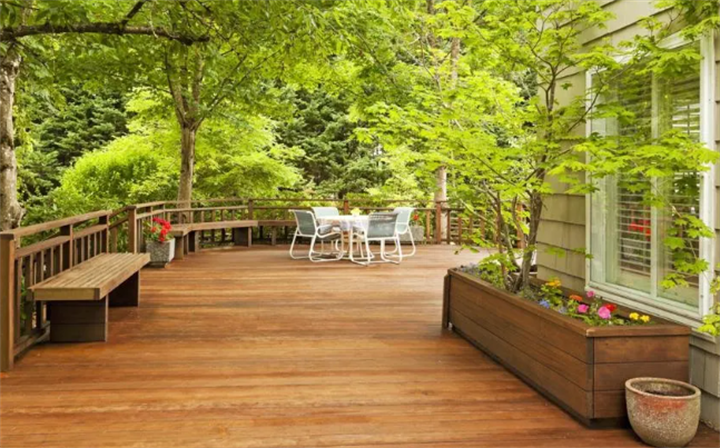
Natural hardwoods like ipe stay just warm to the touch even in full sun, thanks to their low thermal conductivity.
But the samples I’ve kept here in Phoenix started developing tiny end-checks after about six months without oiling.
As for composites, there’s a huge range—a mid-price board I tested buckled slightly after its first summer, while a premium board with a “cool-coating” ran about 8°F cooler in the same side-by-side comparison.
That’s just one test of two specific products; I can’t vouch for all composites, but the differences are real.
Artificial turf is the question I get most often.
I measured a premium product in a Glendale yard with small children; at 2 p.m. in full sun, the surface read 152°F—that was a single reading on that specific turf, and colors, infill, and brand all affect results.
The owner immediately decided to move the turf to a shaded area.
My rule: if you use artificial grass at all, place it only where it gets full, all-day shade, and choose a product with light-colored blades or cooling infill.
I also advise parents to test the surface with the back of their hand—not the foot—because the hand is more sensitive to heat.
As for dark-colored paving, I almost automatically steer clients away.
I once worked with a couple who insisted on dark gray limestone for a modern design.
The first June after completion, their three-year-old tripped near the pool and briefly touched the ground—it raised blisters on her calf.
I measured the spot that day and got 168°F. That was a specific moment, but the trend is undeniable: dark materials absorb far more heat than light ones.
They replaced everything with light travertine. This isn’t about aesthetics—it’s a safety incident.
In every project I handle, dark pavers are off the table anywhere feet might go.
Water Features & Plants – Evaporation Is the Real Air Conditioner
In Arcadia, I designed a three-tier waterfall inspired by Arizona creek beds.
The owner wanted it in full sun as a focal point, but I insisted on placing it on the east side of the pergola, in half-day shade.
That decision paid off: one June afternoon at 2 p.m., the wet stone at the water’s edge measured just 91°F, while a dry stone a few feet away was over 140°F.
Those were simultaneous readings on that site, and the combination of shade and evaporation made a huge difference, though exact numbers shift with humidity and breeze.
Sitting nearby, you could feel a gentle coolness. But I’ll be upfront: this effect depends on humidity, wind, and shade—it doesn’t always repeat.
I’ve also seen unshaded fountains turn into tepid baths by July, encouraging algae instead of comfort.
On the plant side, I work closely with desert landscapers.
I like to create a planting ring around seating areas with Palo Verde trees, desert willow, and Texas sage.
A Palo Verde with an eight-foot canopy can reduce the surface temperature underneath by 15°F or more compared to full sun—that’s an estimate based on observations across several projects; it varies with canopy density and sun angle.
The USDA Forest Service has published research showing that urban trees can cool the air locally through evapotranspiration (USDA Forest Service, 2018—the specific link I used has moved, but the general finding appears in many similar forestry studies).
In my experience, in an enclosed yard, that cooling adds up. I don’t think plants can solve the heat problem alone, but without them, your yard is just a frying pan.
Systems, Not Single Products
The most useful lesson I’ve learned in Phoenix is that no magic material can beat the summer on its own.
Every successful project I’ve handled combines shade, paving, water, and plants working together.
I make a habit of returning to each site at different times of day, thermometer in hand—and barefoot—to check whether the materials are telling the truth.
Every check reaffirms that a true desert oasis isn’t bought; it’s tested.
FAQs
Q: What do you use in your own yard?
A: In the places I’ve lived around Phoenix, I’ve always used light travertine for paving, plus a large ceiling fan under the pergola. That’s the balance I’ve found between comfort and maintenance. If someone’s on a tight budget, I recommend light concrete pavers with some gravel areas rather than cutting corners on safety.
Q: Can artificial turf really not be used in sun?
A: In most of my measurements, turf in direct sun hits surface temperatures at or above the danger zone—exact numbers depend on the product, but the trend is consistent. I only install it where it has reliable shade. If you can’t provide that, skip it.
Q: What if I insist on dark paving—any workarounds?
A: The most extreme fixes I’ve seen are outdoor carpets or wood deck tiles, but they bring maintenance and tripping hazards. Honestly, replacing dark materials is cheaper and less hassle than any patch-up. Safety isn’t something you want to patch.
Q: Does wind affect misting systems?
A: Yes. On windy days, the fine mist blows away, and cooling drops significantly. I usually recommend placing nozzles on the upwind side of the pergola, so the breeze pushes cooled air into the seating area rather than carrying the mist off.
Disclaimer
This article is based on the author’s personal construction and observational experience in various climates. It is for educational and informational purposes only and does not constitute professional engineering, horticultural, or medical advice.
All temperature readings are specific observations taken at particular times and locations; they are not fixed physical constants and should not replace on-site testing.
Always consult local licensed professionals before construction, and follow all applicable building codes and product installation instructions.
The author assumes no liability for any loss or injury arising from the use of this information.
References
[1] ASHRAE. (2019). 2019 ASHRAE handbook—HVAC applications. American Society of Heating, Refrigerating and Air-Conditioning Engineers. (The discussion of evaporative cooling references the general trends described in this handbook; specific cooling values are from the author’s own measurements.)
[2] U.S. Department of Agriculture, Forest Service. (2018). Urban forests and climate change. (The specific web link cited by the author is no longer active; this reference is used for the general research on evapotranspirational cooling by urban trees.)
[3] Valleywise Health. (n.d.). Burn prevention: Hot surfaces. Arizona Burn Center. (The warnings about surface burn risks reflect the center’s general safety recommendations; exact burn thresholds depend on contact time and should be checked against the latest official guidance.)
About the author:
Dusty Rhoades
Builder without a fixed address. Over the past decade, he has constructed from the hurricane-prone coast of Florida all the way to the permafrost of Alaska, building outdoor facilities and providing accommodation and meals for farms, towns, and national parks. He only recommends materials that have survived a snowstorm or an entire rainy season right in front of his eyes. His advice is: "Your postal code is more authoritative than any design magazine."
Related Articles
Phoenix Courtyard Design for Extreme Heat: How Adobe and Rammed Earth Walls Stay Cooler
Recommend:
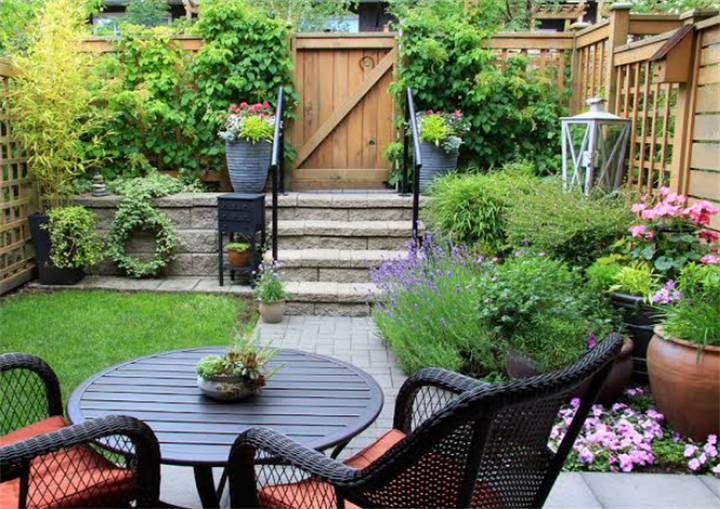
Creating a Backyard Oasis in Phoenix That Won’t Burn Your Feet – A Material Guide
The 30% Renovation Budget Reserve Rule: A Line-by-Line Breakdown of Hidden Plumbing and Electrical Costs
The Frost Line Reality in Minnesota: Why Your Retaining Wall Needs a 48-Inch Gravel Base

The Hidden Soft Costs of Outdoor Projects: Design, Permits, and Surveying