
Published: August 4st, 2026 Est. |⏱️~10 minutes
By Dusty Rhoades
Western Red Cedar is one of the most valued softwoods in the Pacific Northwest. It resists rot naturally, holds its shape well, and fends off insects—all without chemical treatment. That makes it a go-to material for siding, decks, fences, and outdoor structures throughout the region.
But the supply chain behind this wood has shifted significantly over the past decade. Coastal harvest levels in British Columbia have fallen by roughly one million cubic meters compared to the 2015–2018 average (Western Forest Products, 2022). Major mills have announced repeated curtailments and temporary shutdowns.
At the same time, softwood lumber duties have hit high-value products like Western Red Cedar especially hard, and demand has wobbled. These pressures have pushed many contractors, woodworkers, and DIYers to look harder at local small sawmills.
The question is whether those small mills actually deliver better value than the big-box stores. The answer usually comes down to five things: price, quality, expertise, customization, and the risks you are willing to manage.
What Supply Tightness Looks Like on the Ground
Numbers in a report are one thing. What shows up on the lumber rack is another.
Back in 2009, on a deck job in Jacksonville, Florida, I bought Western Red Cedar from a national home center. The boards were wide, thick, and sharply aromatic. I paid about $2.80 per board foot (personal records, 2009).
By 2023, on a siding project for a beachfront inn in Astoria, Oregon, the same chain quoted me $5.20 per board foot for the same grade. The boards were noticeably narrower and carried more sapwood (price check, 2023).
That jump mirrors the supply squeeze Western Forest Products flagged when it announced coastal cedar harvests had dropped by about one million cubic meters from earlier levels (Western Forest Products, 2022).
More recently, in the first quarter of 2026, a purchasing manager at one big chain told me their Western Red Cedar allocation had shrunk by close to 30 percent compared to the same period in 2025. In-store lengths, once commonly 6 to 16 feet, were compressed to 8 to 12 feet (anonymous purchasing manager, personal communication, March 2026).
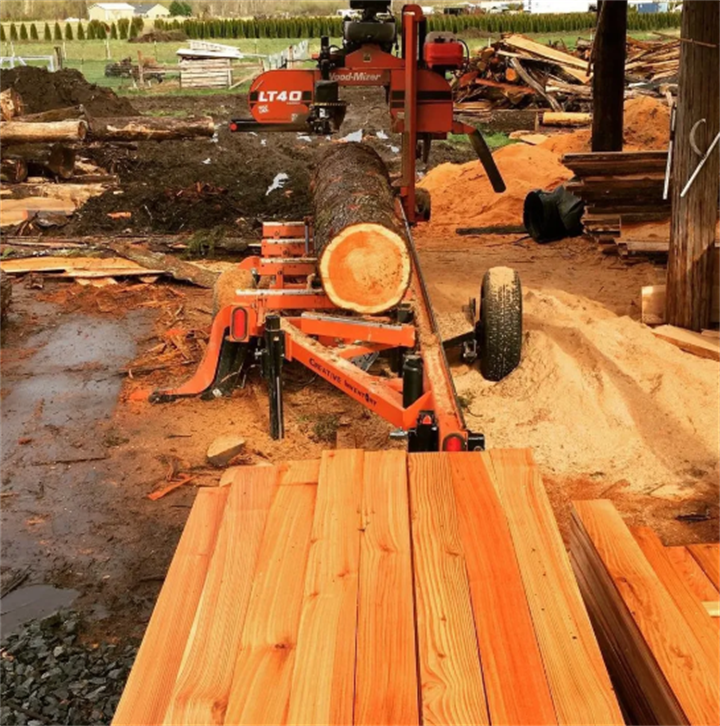
At almost the same moment, a small family-run mill across the Columbia River had 20-foot clear boards with heartwood content above 90 percent. Their price was $4.10 per board foot (price observed on site, Q1 2026).
Same region, same season, two very different realities. That is not a fluke. Big boxes run on national contracts and long-haul logistics. Small mills often buy logs from within a 60-mile radius. That difference shapes everything that follows.
Price—Rough-Sawn and Bulk Savings
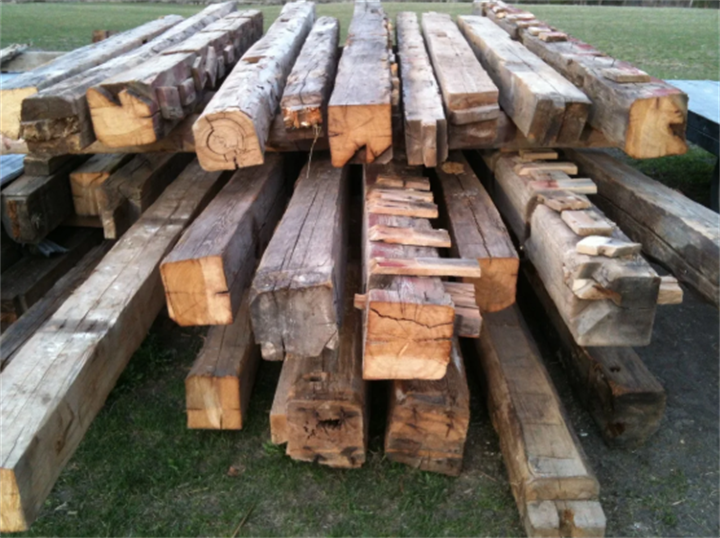
The most direct way small mills save you money is rough-sawn lumber bought in bulk.
In the summer of 2024, I fenced a farm near Port Townsend, Washington, and needed about 1,200 board feet. Home Depot’s price for kiln-dried, surfaced 1×6 Western Red Cedar came in at $6.10 per board foot—roughly $7,320 in material (price quote, June 2024).
A local sawmill fifteen miles away offered the same species as rough-sawn for $3.10 per board foot. Total material cost: about $3,720 (purchase records, same project). I spent three extra days jointing and edging. The labor I put in was the labor the mill did not have to charge for.
Fine Woodworking magazine has reported that buying rough-sawn can cut costs by 30 to 60 percent compared to S4S (surfaced four sides) stock (Fine Woodworking, 2022). That range held true in this case.
Big-box pricing carries a lot of overhead. On a remote eco-camp project near Fairbanks, Alaska, I compared prices in 2023. Kiln-dried Western Red Cedar shipped from Canada was selling at a big-box yard in Anchorage for around $7.50 per board foot. A small mill in the Matanuska Valley, sourcing from local thinning operations, sold air-dried material for $4.80 (personal price comparison, summer 2023).
The gap reflects interstate freight, climate-controlled warehousing, and the cost of carrying national SKUs. Small mills typically serve a few counties and put the freight savings right onto the price tag.
Short pieces and offcuts are another underused money-saver. For a red cedar picnic table in Cannon Beach, Oregon, I glued up a top from twelve short boards, each about 20 inches long. A local mill let them go for $0.90 per board foot because they were under four feet and could not be sold as standard construction stock (purchase records, circa 2024).
If you are willing to work with joints, you can buy clear cedar for pocket change. Shorter pieces also tend to move less after drying—the internal stresses release over a smaller span. Big-box stores rarely sell short drops at retail, so this option barely exists on their shelves.
Quality—Ring Count and Heartwood Tell the Story
Big-box cedar looks uniform. That is about as far as its quality advantage goes.
In Tampa, Florida, I once watched two decks on the same house age side by side. The east deck was built with #2 grade Western Red Cedar from Home Depot. Within eighteen months, three boards had cupped visibly, and the end-grain checks were trapping water and starting to soften.
The west deck used local cedar from a small mill north of Pensacola, given a short air-dry before installation. After three hurricane seasons and a dozen tropical storms, the boards had weathered gray, but none had warped or rotted.
I crosscut a scrap from each pile. The big-box board showed growth rings spaced four to five millimeters apart, with latewood proportion under 15 percent by visual estimate. The small-mill board had tight rings and latewood I estimated above 30 percent (field notes, 2018–2019).
Growth rate is the first big fork in the road for durability, and it tips heavily toward slower-grown trees like those found in parts of the Pacific Northwest.
The USDA Forest Products Laboratory’s Wood Handbook notes that Western Red Cedar’s natural durability comes from heartwood extractives, and that heartwood proportion and decay resistance relate to growth conditions (USDA Forest Products Laboratory, 2010).
I cannot measure extractive levels on a job site, but there is a quick field check that works. On slow-grown heartwood, water beads up and rolls off. On fast-grown stock, it flattens out and soaks in fast. In a rainy climate, that test tells you more than a grade stamp ever will.
Big-box grading also strips out character. Bird’s-eye, curly grain, and spalting are treated as defects and either cut away or downgraded. Small mills often see them as features.
At a small operation in Yakima, Washington, I came across a batch of Western Red Cedar with dark brown streaks running through it. The mill owner called it natural spalting—fungus that had moved through the living tree without hurting the wood’s strength (on-site notes, circa 2019).
Those boards ended up as an accent wall in a wine tasting room. The visual effect was somewhere between ink wash painting and storm clouds. Material cost ran about a third of what commercial-grade decorative paneling would have cost for the same area (project cost estimate).
That kind of payoff does not show up on a price-per-board-foot comparison. You find it by flipping through the stack yourself and talking with the sawyer.
Expertise—Transparency from Stump to Job Site
Ask a big-box associate where a particular cedar board came from or how it was sawn, and the answer rarely goes beyond what is on the label.
I once asked about the moisture content of a lift of Western Red Cedar at a Lowe’s in Boise, Idaho. The associate checked the system and came back with “kiln-dried.” Whether that meant 12 percent or 15 percent, no one could say (personal inquiry, circa 2021).
For someone building fine furniture, the difference between 6 percent and 15 percent moisture content can be the difference between a flat drawer face and a cracked one.
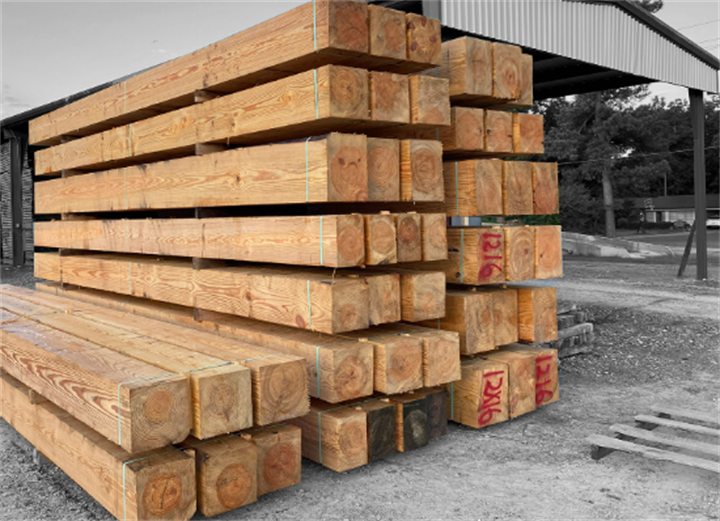
At the small mills I return to, the owner can often walk me to the log deck and tell me when and where a particular log was harvested, how it was sawn, and its current moisture content. A typical answer might be: “That log came from a private woodlot east of Tacoma last winter. Flat-sawn, air-drying about six months now. Moisture content is probably around 18 percent” (mill operator conversation, 2023).
With that level of detail, I can calculate how much more the wood will shrink in service and plan my joinery accordingly.
Long-term relationships add a layer of informal but high-value support. In 2025, I was restoring a 1920s Craftsman home outside Seattle. It needed replacement cedar siding milled to a true 2-inch thickness to match the original.
Big-box stores offered only nominal 2× stock, which actually measures about 1½ inches thick. Three stores, zero custom options. A small mill on the Olympic Peninsula I had worked with for years took on the job.
They not only matched the thickness but chose quarter-sawn orientation based on the original grain to reduce cupping. The custom stock cost about 20 percent more than off-the-shelf boards from a big box, but it saved replacing the entire exterior envelope. Total renovation savings came to at least $12,000 (project cost estimate, 2025).
The mill owner also sketched a diagram showing predicted movement direction for each batch. That drawing was free. On a century-old house, its value probably exceeded the lumber.
Small-mill operators also tend to understand local microclimates in ways that national chains do not. In the Columbia River Gorge, for instance, strong winds mix with dry inland air, so deck boards lose moisture faster than they do on the foggy coast. That means wider installation gaps are usually a good idea. Advice tuned to a specific zip code like that almost never comes out of a big-box training manual.
Big-Box Limitations and the Traps That Come with Them
Big-box stores are hard to beat when you need a few 2x4s right now. But when the job demands high-performance outdoor wood, their limits surface quickly.
In 2019, I was rebuilding a dock pavilion on Mobile Bay, Alabama. Rushed for time, I pulled Western Red Cedar from a nearby Home Depot. Within two months, about one board in five had started to cup. Small cracks radiated from fasteners. Salt spray corroded the “coated” deck screws within a year (field records, 2019).
Looking back, the likely culprit was uneven moisture content. The stock had been dried in a warehouse but probably picked up moisture during transport. I installed it without stickering and conditioning on site, and the wood dried unevenly in place.
After that, I made it a habit to buy air-dried stock from mills and condition it for at least two weeks under cover. The rate of movement-related callbacks dropped sharply.
Another trap is the dimensional illusion. Many DIYers grab a “2×4” and only realize at the saw that it measures 1½ by 3½ inches. That is manageable in new construction. In remodels, it can be fatal.
A carpenter in Sitka, Alaska, once told me he tried to replace original true 2-inch-thick red cedar window sills on a 1920s fishing cabin with big-box “2×6” stock. The half-inch mismatch threw the window frame out of plane and forced a full redo (personal communication, circa 2022).
A small mill could have sawn exactly what he needed without compromise. These dimensional details can make or break a project that has to mate with old framing.
What You Need Before You Buy Rough-Sawn
Small mills have clear advantages, but they also assume a certain set of tools and skills.
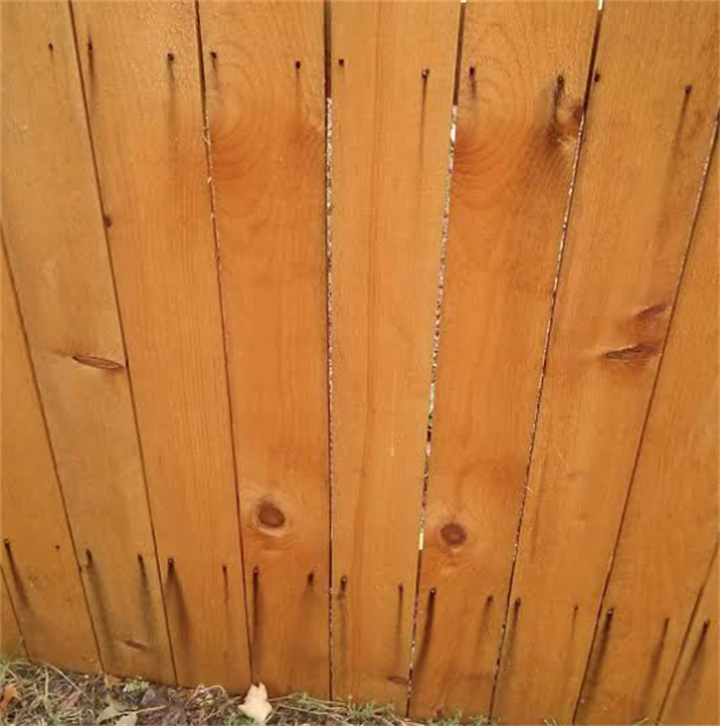
First, moisture and drying. Most rough-sawn stock from a small mill is green. Western Red Cedar heartwood can average around 58 percent moisture content when fresh (USDA Forest Products Laboratory, 2010).
If you plan to use it indoors or for fine work, expect to air-dry it for six to twelve months, or pay for kiln drying. I once tried to rush green red cedar into a bookcase. Six months later, the side panels had shrunk enough to leave quarter-inch gaps, and the whole piece was scrap.
Second, equipment. A thickness planer, a table saw, and adequate infeed and outfeed space are the practical minimum for turning rough-sawn lumber into something usable. Without them, the work is slow and the results are rough.
Third, you have to be able to grade your own material. Small mills do not always sort to uniform grades. You will need to pick through the stack and cull pieces with severe bow, twist, or end splits.
If that sounds like a chore you would rather avoid, a small mill’s pricing may not be the bargain it first appears.
If you can check all three boxes, the value from a small mill expands fast. If you cannot, “cheap” lumber that you cannot process just becomes expensive firewood.
The best insurance is to visit the mill with a cut list in hand, inspect the stock yourself, and run a small test batch through your own workflow before committing to a full order.
The Practical Takeaway
In the Pacific Northwest, local small sawmills often beat big-box stores for Western Red Cedar on five verifiable points.
Rough-sawn and bulk buys can cut material costs significantly—Fine Woodworking (2022) cites a range of 30 to 60 percent, and I have repeatedly seen savings near 50 percent.
Slower-grown, old-growth or second-growth logs deliver higher heartwood ratios and better decay resistance, which matters a great deal in damp coastal climates.
Mill operators offer localized expertise that reduces long-term maintenance costs. True custom dimensions make it possible to restore historic structures and execute non-standard designs without compromise.
Cutting out long-distance freight and middlemen lowers both cost and embedded carbon.
None of this works, though, if you are not willing to learn the wood’s habits and invest in drying and processing. Direct experience is still the most reliable way to judge where your money should go.
Your zip code tells you what materials you are likely to need. Your hands—and a few test boards—will tell you who to trust.
FAQs
Is all red cedar from small mills green and unseasoned?
Not always. Some mills sell air-dried stock (often 12–19% moisture content) or can arrange kiln drying. But rough-sawn green material is the most common offering. Always ask about moisture content before buying and be honest about your drying setup.
Can I use rough-sawn cedar as-is for outdoor fences?
Yes. The rough surface is fine outdoors and actually holds finishes like oil-based stains well. If splinters are a concern, a quick pass with coarse sandpaper is usually enough.
Are small mills always cheaper than big-box stores?
They tend to be, especially for bulk rough-sawn orders. If you only need a few pieces of surfaced stock, a big-box store may be more convenient and the price gap may be small.
Do the prices mentioned in this article reflect today’s market?
They reflect specific transactions at specific times and locations. Prices vary with region, grade, and supply conditions. Always get current quotes for your project.
Disclaimer
This article is based on hands-on building experience across multiple North American climate zones and on publicly available industry data. All prices, performance observations, and case examples are specific to particular times and places. They do not represent guarantees about any sawmill or retailer. Visit suppliers in person, request samples, and consult qualified professionals before making major purchasing decisions. I have no financial ties to any commercial entity mentioned in this piece.
References
[1] Fine Woodworking. (2022). Rough-sawn lumber: What to know before you buy. Fine Woodworking, 298, 54–58.
[2] USDA Forest Products Laboratory. (2010). Wood handbook: Wood as an engineering material (General Technical Report FPL-GTR-190). U.S. Department of Agriculture.
[3] Western Forest Products. (2022, October). Chemainus sawmill temporary curtailment update. Western Forest Products Press Release.
[4] Western Forest Products. (2026, April). Q1 2026 market update and operational adjustments. Western Forest Products Investor Relations.
About the author:
Dusty Rhoades
Builder without a fixed address. Over the past decade, he has constructed from the hurricane-prone coast of Florida all the way to the permafrost of Alaska, building outdoor facilities and providing accommodation and meals for farms, towns, and national parks. He only recommends materials that have survived a snowstorm or an entire rainy season right in front of his eyes. His advice is: "Your postal code is more authoritative than any design magazine."
Recommend:
The 30% Renovation Budget Reserve Rule: A Line-by-Line Breakdown of Hidden Plumbing and Electrical Costs
Outdoor Kitchen Stucco Finishes: Smooth vs. Exposed Aggregate—The Real Cost Breakdown Before You Build
Creating a Backyard Oasis in Phoenix That Won’t Burn Your Feet – A Material Guide
Western Red Cedar Supply in the Pacific Northwest: Why Local Small Sawmills May Beat Big-Box Stores